

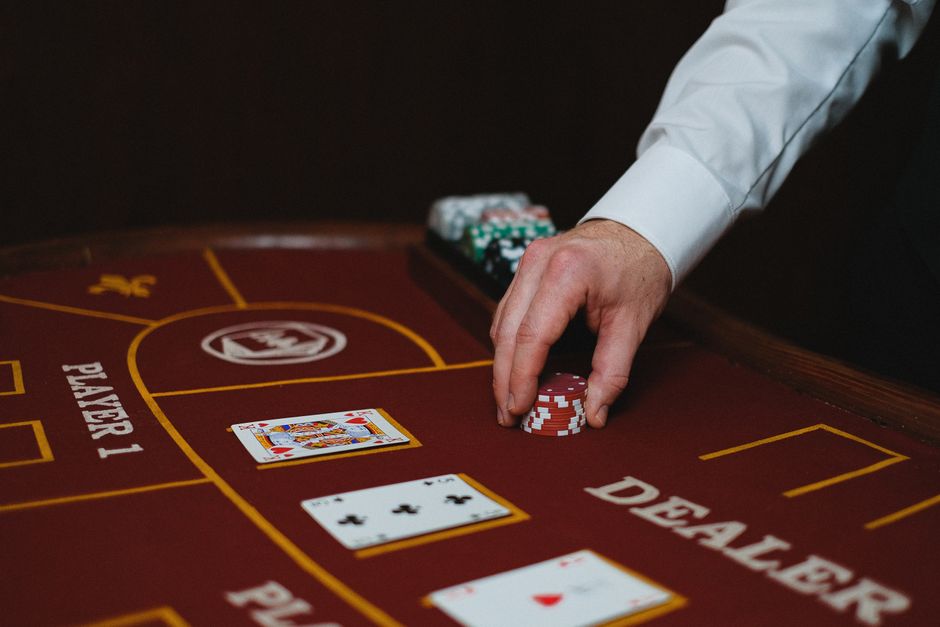
Most players lose money at online casinos and sportsbooks, and the reason has nothing to do with luck, hot streaks, or whether they picked the right moment to spin. It comes down to a number most people never bother to look at: the house edge. Understanding that number — and how it changes across slots, table games, poker, and sports betting — is the single biggest advantage a recreational player can gain. It won't make you rich, but it will keep you from being the guy who wonders where his bankroll went after a weekend of "just having fun."
Every game in an online casino runs on a built-in mathematical advantage for the operator. That advantage is the house edge, and it's expressed as a percentage of every dollar wagered that the casino expects to keep over the long run. The key phrase there is every dollar wagered, not every dollar deposited. This is where most players trip up.
Consider two players. Player A deposits $500 and puts it all on a single hand of blackjack at a 0.5% house edge. Player B deposits $500 and cycles it through a slot machine twenty times before losing it. Player A's expected loss on that action is about $2.50. Player B's expected loss — assuming a 4% house edge on a $10,000 total wagered — is $400. Same deposit, wildly different outcomes, all because of how many times the money got exposed to the edge.
This is why churning through your bankroll on high-volume slots, or grinding low-stakes blackjack for hours just to clear a bonus, can quietly drain you. The edge doesn't hit you per session. It hits you per bet.
Every regulated slot has a published Return to Player percentage — usually somewhere between 94% and 97.5%. That means the house edge swings from about 2.5% to 6%, and the difference is enormous over thousands of spins. Further details are available through dàn đề.
Here's the practical tip: RTP is not the same as volatility. A 96% RTP slot with high volatility might pay out in massive, rare bursts and feel like it never wins. A 96% low-volatility slot pays smaller, more frequently, and feels "loose." Neither is a better deal in EV terms, but they suit different bankroll sizes. If you're playing with $100, a low-volatility slot with a 96% RTP will give you far more entertainment time than a high-volatility one that can eat $80 before your first meaningful hit.
Also worth knowing: many jurisdictions now require slot studios to disclose RTP in the game's help menu. Check it before you spin. If a slot offers multiple RTP settings (some do — the same game may run at 94% or 96% depending on the operator), you want the higher number.
Poker is different from slots. In a slot, the house wins because the math is built in. In poker, the house wins because it charges a rake — a small percentage taken out of each pot, usually capped between $1 and $3 at low-stakes online tables.
This has two big implications:
GTO (game theory optimal) ranges and solver tools have become standard study material for anyone serious about profit. But the real edge for most recreational players isn't memorizing a solver's chart — it's exploiting population tendencies. If your opponents at a given stake never fold top pair, stop bluffing rivers. If they check back too often on the flop, start leading with strong hands. That reads are worth more than any theoretical range at low stakes.
Unlike slots, sports betting markets are often incredibly efficient at the top level — major soccer leagues, NFL spreads, NBA totals. Books compete hard, and the margin on a standard two-way market is typically around 4–5% total (about 2% on each side). That's already tighter than most casino games.
But edges exist. They appear in three main places:
The fastest way to lose at sports betting isn't bad picks — it's parlay addiction. A four-leg parlay at fair odds is already a high-variance, negative-EV bet. When a book adds full juice to each leg plus a parlay tax, that negative edge compounds like crazy. Stick to singles unless you have a very specific reason to combine.
If you just want low house edge and simple rules, blackjack remains the best offering in most online casinos. Basic strategy — the mathematically correct play for every hand based on the dealer's upcard — reduces the edge to roughly 0.5% on a standard six-deck game with favorable rules. It takes a couple of hours to memorize the chart. After that, you're playing one of the cheapest games in the building.
Baccarat is even simpler, but the numbers are sharper than most expect. The banker bet carries roughly a 1.06% edge, the player bet about 1.24%, and the tie bet — the trap most casual players drift toward — typically sits around 14%. It is, quite simply, a terrible bet dressed up in mystique.
Even within blackjack, rules matter. A 6:5 payout for blackjack instead of the traditional 3:2 adds roughly 1.4% to the house edge on its own. That single rule change can turn a decent game into a mediocre one. Look for tables that pay 3:2, allow doubling after splits, and allow late surrender.
Nobody beats the house over enough bets without an edge or a promotion. The iGaming world is not a place to find a secret formula, despite what every tipster, streaming slot win, and "guaranteed system" on YouTube implies. But it is a place where a knowledgeable player loses less, plays longer, and occasionally comes out ahead — by choosing the right games, the right stakes, the right markets, and by paying attention to the numbers printed in the help menus. The difference between a frustrated loser and a relaxed recreational player isn't luck. It's arithmetic.

Copperedit We spend our time finding what works so you don't have to, and sharing exactly what made the difference.

Copperedit We spend our time finding what works so you don't have to, and sharing exactly what made the difference.

Compare thickness, finish and heat resistance before choosing a copper splashback. This guide covers practical installation points for busy home kitchens.

Comments
ALina Kelian
19th May 2018 ReplyCopperedit An honest, everyday look at the things that make life a little better — with advice you can actually use. ullamco laboris nisi ut aliquip ex ea commodo consequat.
Rlex Kelian
19th May 2018 ReplyCopperedit No rushing, no fuss — just thoughtful notes and practical help, written by people who care. ullamco laboris nisi ut aliquip commodo.
Roboto Alex
21th May 2018 ReplyCopperedit Real stories, useful guides and the occasional recommendation, all in one calm corner of the web. ullamco laboris nisi ut aliquip ex ea commodo consequat.